

How often do we search the App Store for new and exciting apps, when some of the most powerful tools for creativity, learning and inclusion are already built into iPad?
Camera, Markup and Voice are always among my favourite places to start. Take a photo, add drawings or annotations, and use your voice to explain your thinking. Simple, powerful and endlessly adaptable across year levels and curriculum areas.
And with so much conversation around screen time, restrictions and the need for a ‘digital detox’, this is a perfect example of intentional and purposeful screen use. Students aren't just consuming content. They're creating, thinking, explaining and building their own digital backpack of skills for life.
And if you've only got 15 minutes of screen time a day to work with? This might just be the iPad workflow for you! 😉
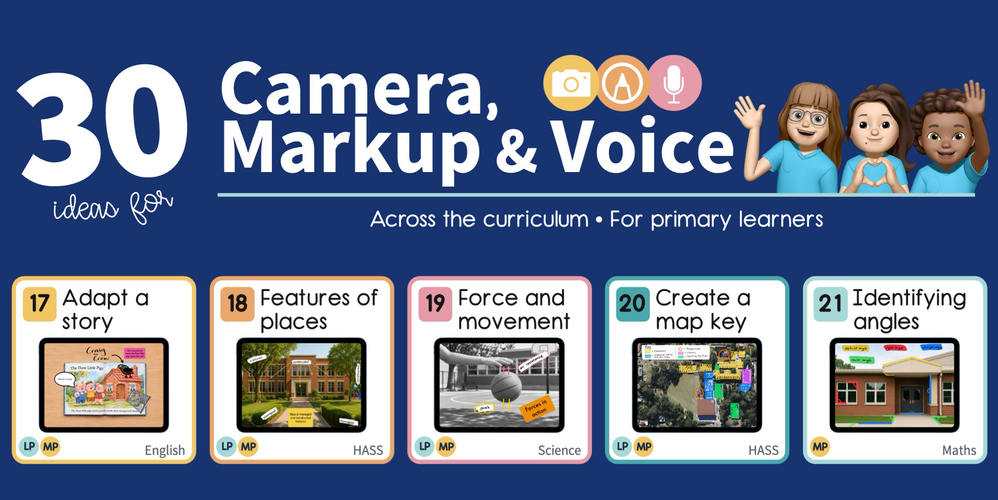
Introducing 30 Ideas for Camera, Markup & Voice!
Inspired by Apple's wonderful 30 Creative Activities series, I've pulled together 30 ways to use Camera, Markup and the optional addition of voice across the primary curriculum.
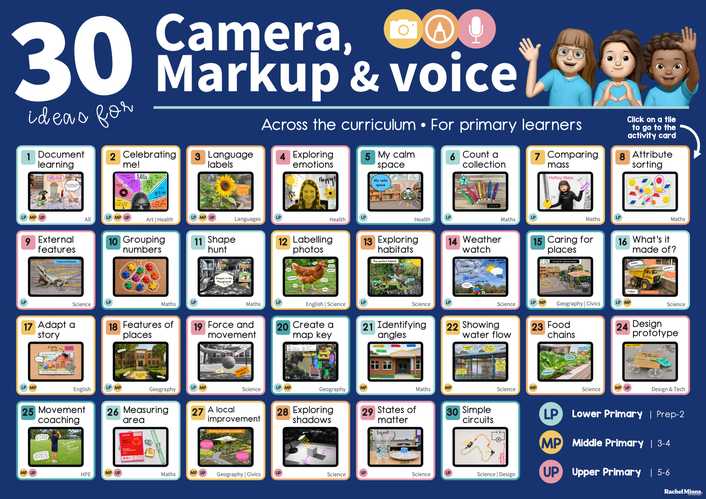
The ideas range from documenting learning, going on shape hunts and exploring habitats, through to modelling food chains, analysing movement, evaluating design prototypes and proposing improvements to local spaces. I have used this style of activity with kindergarten learners (aged 3) all the way through to adult learners. It really is the workflow that can be used time and time again.
Each activity follows the same simple process:
📸 Camera – Capture a photo of something in the world around you.
✏️ Markup – Draw, label, highlight or annotate directly onto the photo.
🎤 Voice (optional) – Explain your thinking, share your discoveries or talk through your learning.
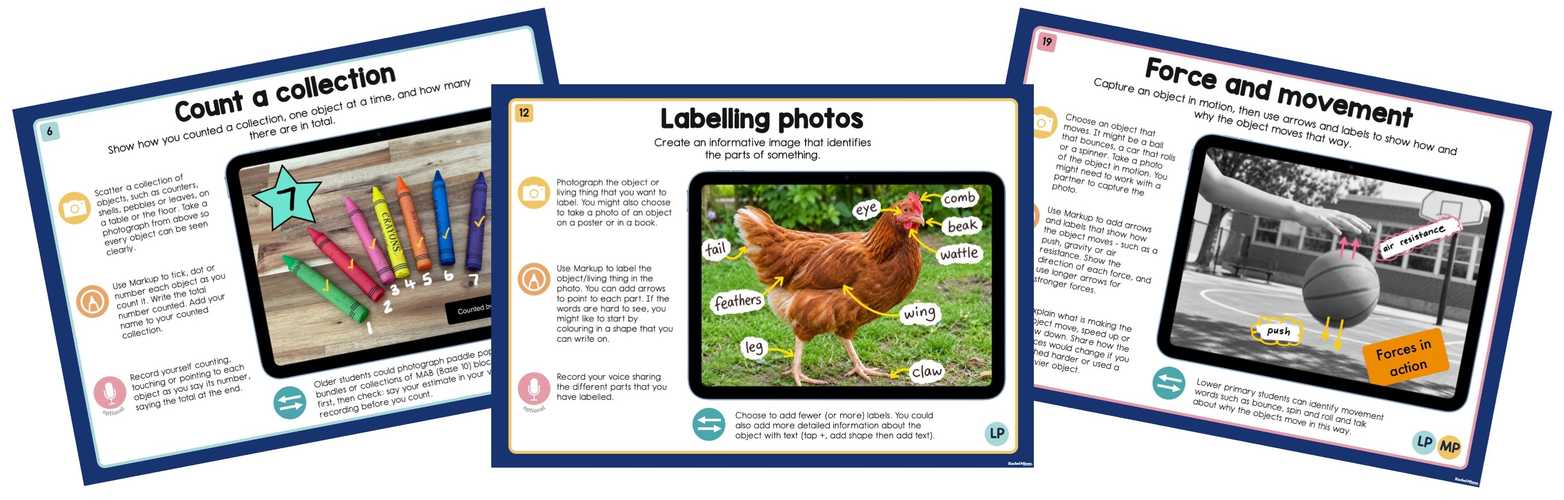
I've included suggested year levels and curriculum areas, along with ways to extend or adapt each activity. Of course, you'll know your students and curriculum best, so use your professional judgement to adapt these ideas to suit your learners and units of work.
New to Markup? I've got you covered!

Embedded in the resource are links to a Markup lesson... taught by me!! There are 2 different lessons to choose from depending on the audience:
- For teachers and mid-upper primary students: This lesson explores the full range of Markup tools. Note this isn't intended to have a polished product at the end, it's a guided exploration.
- For lower primary students: Similar to above, with some tools left out (such as 'Snap to Shape', the ruler and the Lasoo tool). I do still share the Loupe tool and adding Emoji stickers at the end of the lesson (as they are simple but powerful additions to Markup) - but you can choose to skip past this part of the lesson if you feel it is too advanced for your learners.
There's also a printable poster and bookmark with visual instructions for accessing Markup in the Photos app located at the end of the resource. Note there are 2 versions of this, as the recent iPadOS update has changed how we access Markup.
Adding Voice
For me, this is where these simple projects become even more powerful, particularly when we think about inclusive learning. An annotated image can tell us so much about what a student knows, but giving them the opportunity to explain their thinking in their own words can reveal an even deeper level of understanding.
For some learners, recording their voice offers a way to share knowledge that might be difficult to communicate through writing alone. It can also be a wonderful tool for capturing student reflections or teacher–student conversations as part of assessment.
There are a number of ways you can add voice to a photo, and I have suggested my 2 favourite within the resource (with embedded video demonstrations for both in the guide):
iPad Screen Recording: A built-in tool that allows students to record their screen and voice as they talk through their annotated photo. No additional apps needed. One thing to note about this method is that it can result in a large file size, depending on how long the recording goes for.
Photo Story: A free app (that I created 🤯) with a very simple purpose – to add voice to a photo. It's designed with children in mind, requires no logins, collects no personal data and keeps their creations on their device.

What's available to download?
I have included 2 seperate downloads below. First is '30 Ideas for Camera, Markup and Voice - Complete Interactive Guide'.
This includes:
- A one-page overview grid of all 30 activities, with clickable tiles that take you directly to the corresponding activity card.
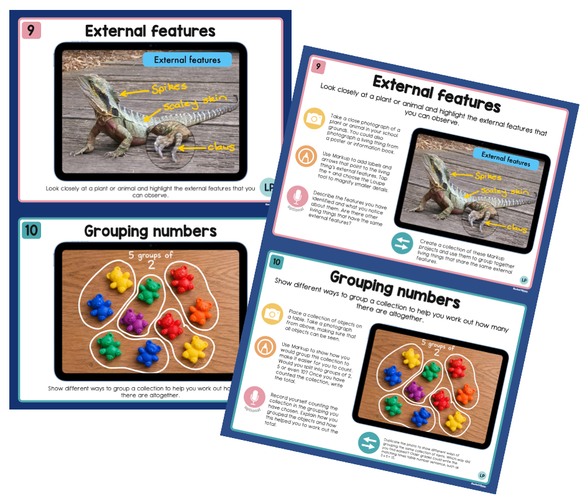
- 30 full-page activity cards, each with an example image, suggested steps for Camera, Markup and voice, and an idea for adapting or extending the learning.
- A Teacher Guide with links to video demonstrations.
- A printable poster and bookmark showing students how to access Markup in Photos.
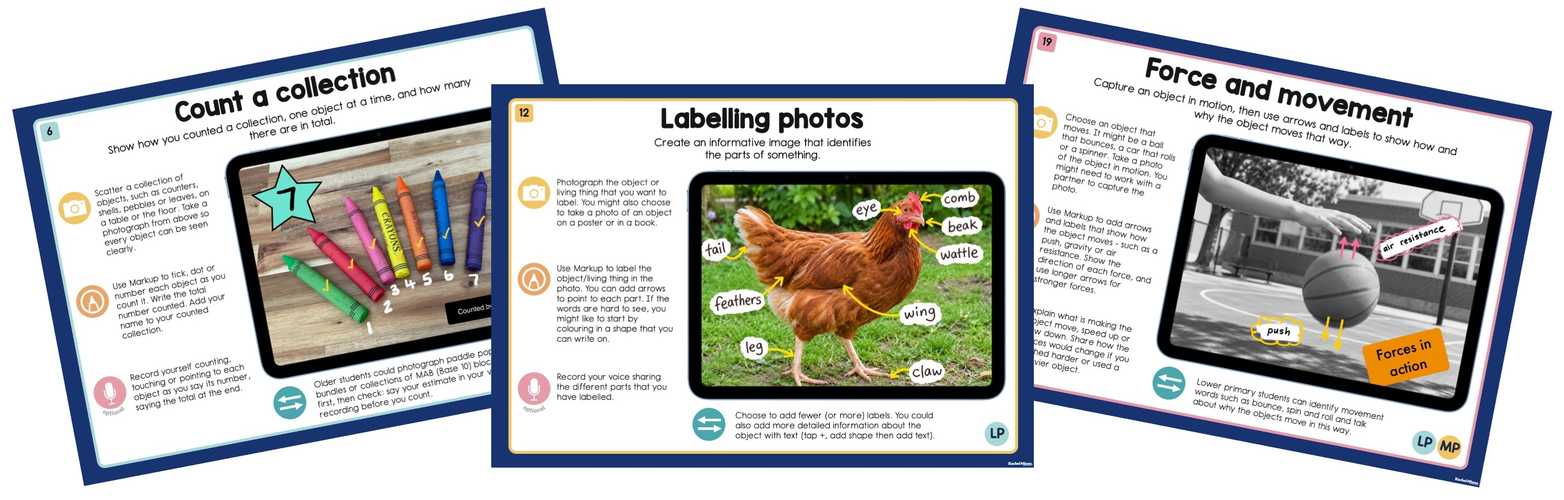
I've also included a separate PDF containing just the 30 activity cards, ready to print as A5 cards. You can choose single or double-sided.
I hope this resource demonstrates the power of a simple, repeatable workflow and what intentional, purposeful use of technology can look like in the classroom.
It's not about learning 30 different apps or 30 different workflows. It's about learning one workflow and applying it in 30 different ways, across year levels, curriculum areas and learning experiences.
When students become familiar with a workflow, they can focus less on how to use the technology and more on what they can do with it. That's where the real power lies – giving students the confidence, independence and creativity to capture, create, communicate and share their learning, with technology used for a clear purpose.
I'd LOVE to hear how you're using Camera, Markup and voice with your students.
Please share your ideas or examples in the comments below! 🙌🏻
About the Author: This resource was created by Rachel Minns a teacher and Apple Professional Learning Specialist from Queensland, Australia. Rachel works with teachers and school leaders around the world, both online and in-person, supporting them to use technology intentionally, with a clear purpose, and a focus on inclusive learning. If you would like to learn more about the ways Rachel can support your school with your intentional use of technology, please email at rachel@techplayteach.com.








November 10, 2026 . English
What a fantastic resource, thanks for sharing Rachel! 🤩
This action is unavailable while under moderation.
This action is unavailable while under moderation.